
A quarter of your patient base is overdue for hygiene right now. That's revenue sitting idle, chairs staying empty. For practices in the Netherlands and Belgium, there's an added layer: chasing those patients in Dutch, French, and English means tripling the recall workload. We're seeing front-desk teams lose 40 to 60 hours monthly on multilingual outreach alone, while incoming calls stack up unanswered. The reachability gap widens with every language added.
The multilingual reception desk: Where language switching becomes capacity theft
Walk into any practice in Brussels or Rotterdam during peak hours and the pattern is unmistakable. One call comes in Dutch, the next in French, then English, back to Flemish. Each language switch demands a mental reset that fragments attention and slows response times.
- Manual patient recall already consumes 15 to 20 hours monthly per receptionist, according to the dental patient recall automation research from Layer3Labs. In trilingual or quadrilingual markets, that burden multiplies with every language added to the mix.
- The compounding effect is measurable. Practices handling Dutch, French, and English outreach report recall workloads 2.5 to 3 times higher than single-language equivalents. Staff aren't just making calls, they're translating scripts, adjusting tone, and managing cultural nuances on the fly.
- Language complexity creates a structural reachability problem, not a soft skill gap. The patients you can actually retain depend directly on your capacity to reach them in their preferred language, at scale.
- Multilingual automation operates differently from simple translation. We're talking about systems that understand context, appointment urgency, and recall cadence across language boundaries simultaneously.
The economics shift dramatically when practices serve three or four language groups. What follows is a practical breakdown of why standard recall approaches break down in these markets, and what the numbers actually reveal about multilingual patient retention.
The 40 to 60 hour trap: How language multiplies recall burden beyond human capacity
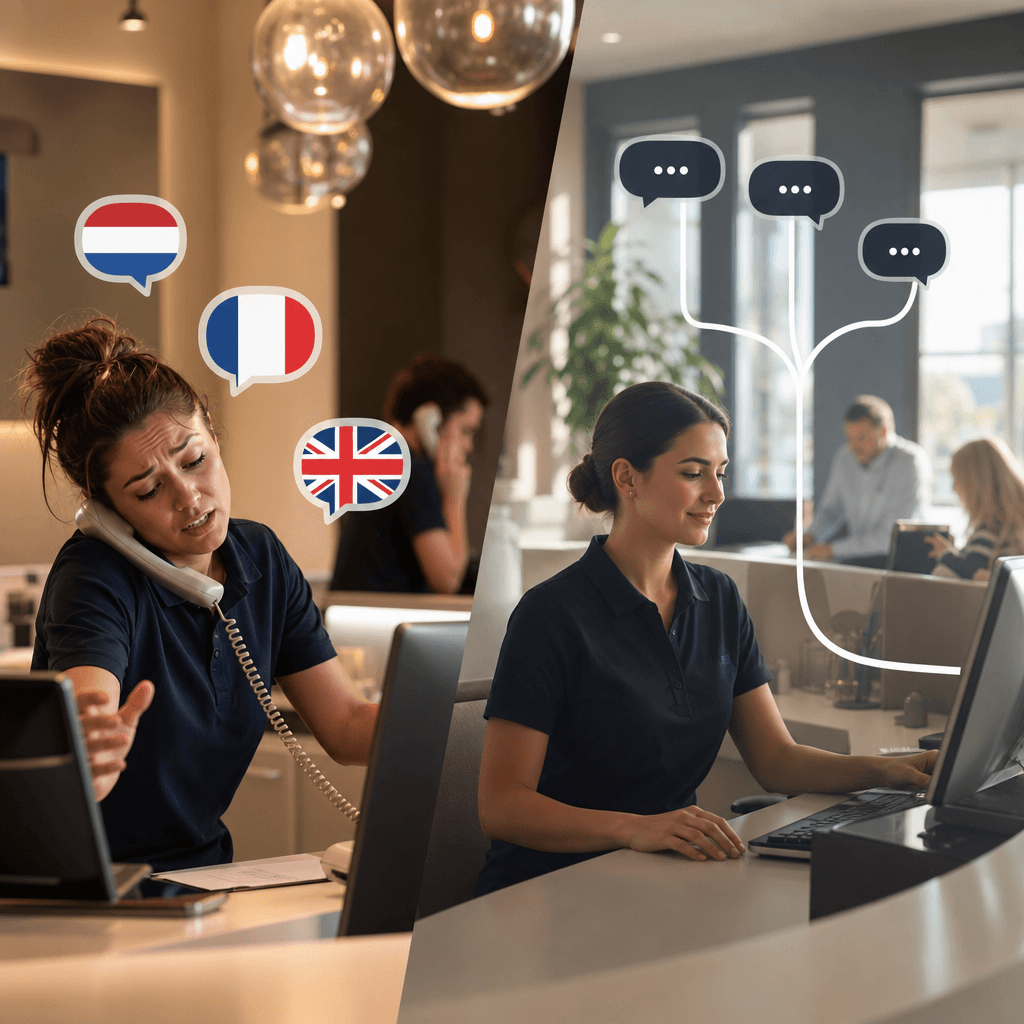
The math is straightforward, and unforgiving. A single-language practice spends 15 to 20 hours monthly on patient recall. Add Dutch, French, and English to the mix, and that baseline doesn't just translate. It multiplies across separate outreach cadences, voicemail scripts, SMS templates, and follow-up sequences for each language group.
We're seeing practices in Brussels and the Randstad hit 40 to 60 hours monthly on multilingual recall alone. That's nearly a full-time position absorbed by phone calls and message drafting.
Now layer in the backlog reality. With 25 to 40 percent of active patients overdue for hygiene at any given moment, each requiring language-matched communication, the queue grows faster than staff can clear it. A 2,000-patient practice might have 500 to 800 overdue patients spread across three language groups. Reaching them all with personalized, native-sounding outreach becomes structurally impossible.
The trade-off hits hardest during peak hours. While receptionists chase lapsed patients in French, live calls from new patients ring through to voicemail. Retention efforts undercut acquisition. Both suffer.
The revenue implications are substantial. Each hygiene visit generates €280 to €470 when exam fees and follow-on treatment are included. A practice losing just 10 patients monthly to language-driven recall failure leaves €2,800 to €4,700 on the table. Over a year, that's €33,000 to €56,000 in invisible losses, revenue that never appears as a line item because the appointments never happened.
Chair utilization economics: Why Belgium and Netherlands practices plateau at 73%
The 73% hygiene chair utilization rate represents an industry-wide ceiling, but multilingual practices often struggle to reach even that benchmark. The gap traces directly back to language complexity in recall and reminder workflows.
- Practices implementing comprehensive recall automation achieve above 90% chair utilization, according to patient communication research from Neolytix. The critical variable: automation must handle language matching automatically, not as a manual workaround layered on top.
- One no-show per day costs dental practices up to €65,000 annually. In Belgium and Netherlands markets, no-show risk compounds when reminders arrive in the wrong language or fail to reach patients at all. A Dutch-speaking patient receiving French-only SMS reminders simply doesn't engage.
- Single-language practices can close the utilization gap with standard automation tools. Trilingual practices cannot. The language layer creates a structural ceiling that generic reminder systems don't address.
- We're seeing a split emerge between markets. UK and German practices move toward 90%+ utilization with off-the-shelf solutions. Belgian and Dutch equivalents plateau at 68% to 72%, even with similar technology investments, because the language matching problem remains unsolved.
The operational gains available to single-language markets stay out of reach until the reminder system speaks every patient's preferred language without manual intervention. That's the missing piece.
Beyond translation: What multilingual automation actually solves
Translation converts text from one language to another. Multilingual automation does something fundamentally different: it detects each patient's language preference, routes communication appropriately, and maintains consistent recall cadences across all languages simultaneously without human intervention.
- The WhatsApp and SMS dimension matters most here. Automated reminders deliver 30 to 40% reduction in no-shows, but only when messages arrive in the patient's preferred language. A Dutch patient receiving a French reminder often ignores it entirely. Manual sorting of language preferences before each campaign creates exactly the bottleneck automation should eliminate.
- Effective recall requires initial contact 7 days before appointments and final reminders 24 hours before. Maintaining that cadence manually across Dutch, French, Flemish, and English means tracking four separate reminder schedules, four sets of templates, and four follow-up sequences. At scale, the system collapses under its own complexity.
- Voicelabs Dental approaches this as parallel language tracks running from a single workflow. The patient's language preference triggers the appropriate sequence automatically. Staff see one dashboard, one queue, one process. The language layer becomes invisible to operations.
- The result removes what we call the language tax entirely. Adding French patients to your base doesn't increase recall workload. Neither does Dutch or English. Each language group receives native-sounding, properly timed outreach without additional staff hours per language added.
The capacity equation changes completely when language matching happens automatically rather than manually.
The reachability fix: Recovering 2.5 daily appointments across language groups
The 2.5 additional daily appointments figure comes from three sources working simultaneously. Reduced no-shows contribute first, with automation delivering 6 to 11% improvement over manual reminder processes. Then there's the overdue patient pool. With 25 to 40% of active patients lapsed at any moment, even modest recovery rates translate to filled chairs. Last-minute cancellations drop 20 to 30% when patients receive timely, language-matched confirmations they actually read.
In single-language markets, these gains are well documented. The dental practice automation playbook from H2Om.AI shows practices consistently adding appointments while freeing 40+ hours monthly from communication tasks. The difference in Belgium and Netherlands? Those same gains remain locked behind the language barrier until automation handles Dutch, French, and English as a single workflow.
Brussels practices face the sharpest version of this problem. Antwerp and border regions aren't far behind. When your patient base splits across three or four language groups, manual recall can't scale fast enough to capture available appointments. The 2.5 daily figure becomes theoretical rather than achievable.
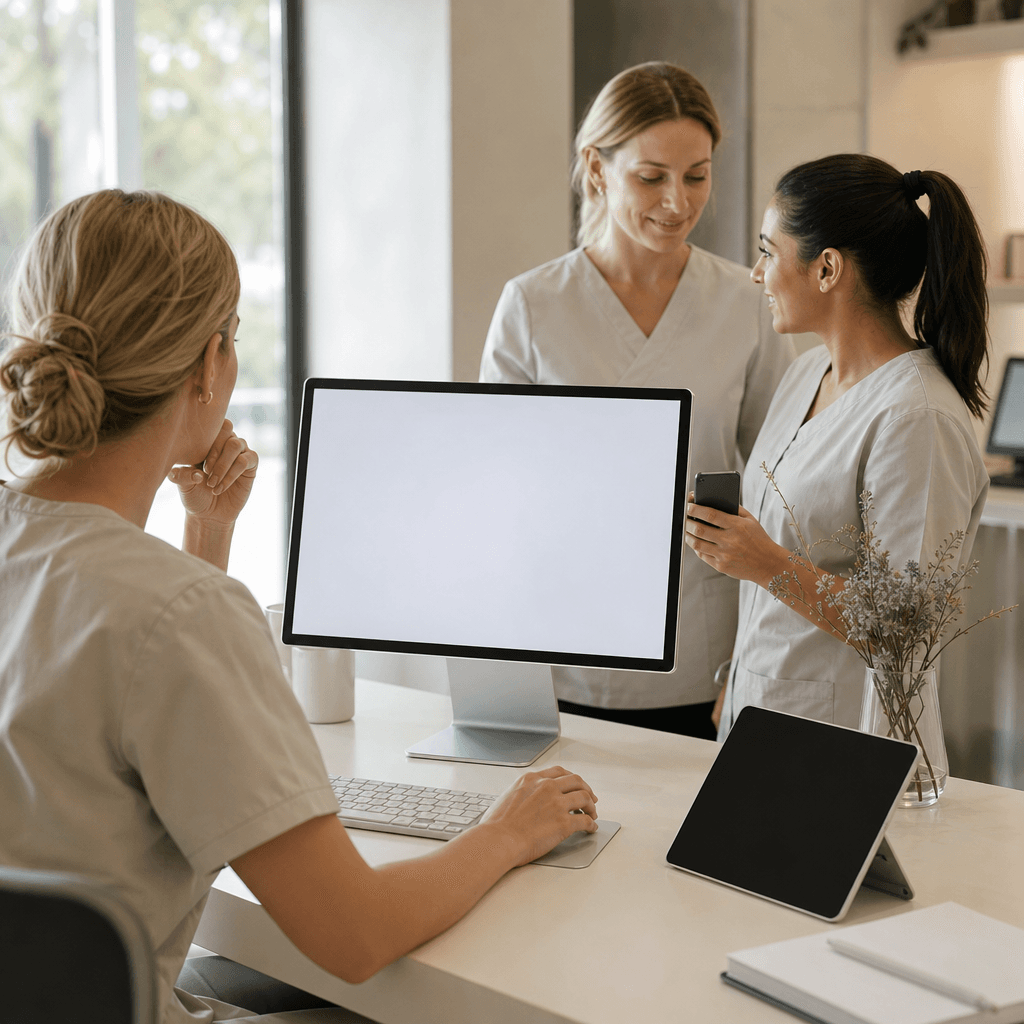
The front-desk relief matters just as much as the revenue. With 40+ hours monthly freed from multilingual recall, reception staff return to what actually builds retention: live patient interactions, urgent requests, the conversations that can't be automated. We're seeing practices shift from chasing overdue patients to engaging present ones.
Running the diagnostic: Is your practice losing patients to language friction?
The pattern reveals itself in the data. Practices losing patients to language friction share common markers: recall success rates that vary by 15% or more between language groups, no-show rates clustering in non-dominant languages, and staff who quietly avoid calling patients outside their native tongue.
A quick diagnostic takes five minutes. Count the languages your practice actively serves. Estimate weekly hours spent on multilingual recall. Pull the overdue patient percentage for each language group separately. The gaps become visible fast. We're seeing Belgian practices where Dutch-speaking patients show 78% reactivation rates while French-speaking equivalents hover at 52%. Same recall effort, different languages, radically different outcomes.
The warning signs are specific. When receptionists route certain patient callbacks to "later," when recall scripts exist in one language but not others, when no-show patterns follow language lines rather than appointment types. These aren't soft skill problems. They're structural capacity limits masquerading as staff performance issues.
Hiring multilingual receptionists doesn't solve this. Working harder doesn't either. The bottleneck sits in the manual matching of language to patient at scale, thousands of times monthly. Automation that handles Dutch, French, and English as parallel tracks removes language from the equation entirely.
The practices solving this layer access what single-language markets take for granted: 90%+ chair utilization, systematic reactivation across their full patient base, and front-desk teams focused on patients in the room rather than patients on a call list.
See how Voicelabs Dental handles multilingual patient communication automatically. Request a demo for Netherlands or Belgium practices.