
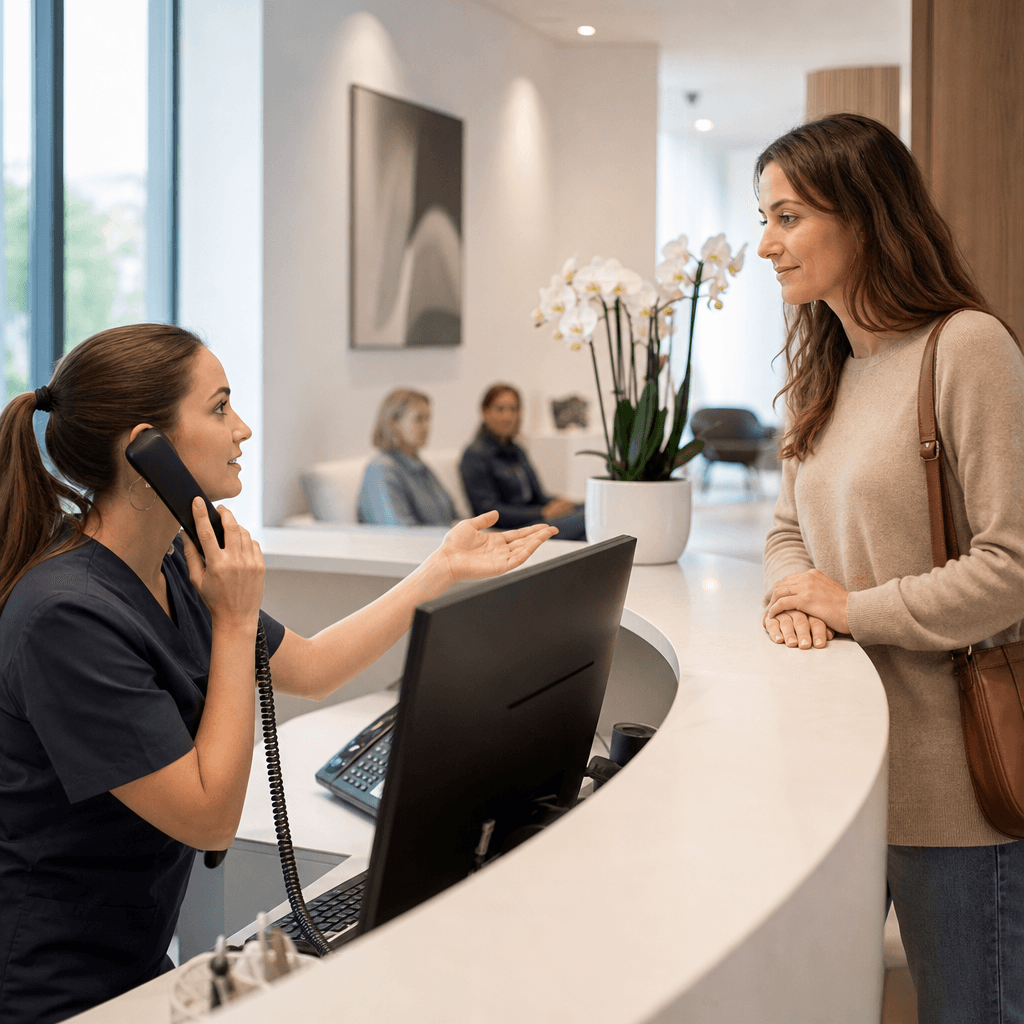
A 42-point retention gap separates top dental practices from the rest. The leaders keep 99% of their patients coming back, while average practices struggle to hold onto 57%. Clinical skill rarely explains the difference. What does? The speed and consistency of patient communication. With 88% of dental appointments still booked by phone, front desk teams face an impossible choice: answer the next call or focus on the patient standing in front of them. That tension creates dropout windows, specific workflow moments where patients quietly slip away and never reschedule.
The dropout window problem: Why patients leave without telling you
The 42-point retention gap between top and average practices comes down to something surprisingly mundane. Not clinical excellence. Not state-of-the-art equipment. Communication responsiveness.
We call them "dropout windows." These are the specific operational moments between appointments where patient relationships quietly end. The voicemail that sits unanswered for 48 hours. The treatment plan discussed at the chair but never followed up. The recall reminder that arrives two weeks after the patient has already found another dentist.
Most practices have no idea where they stand. The industry benchmark for active patient retention sits at 85% or higher, yet the majority of practices operate in the 60 to 70% range without realizing it. Poor measurement, or no measurement at all, keeps the problem invisible. According to proven retention strategies tracked across hundreds of practices, this gap costs far more than most owners suspect.
The math is brutal. Retaining an existing patient costs 5 to 7 times less than acquiring a new one. Every patient lost through a dropout window represents not just one missed appointment, but years of potential treatment value walking out the door.
What follows is a time-based workflow mapping approach. We're identifying exactly where in reception workflows patients disappear, minute by minute, across the patient journey.

"Patients don't complain before leaving. They just stop calling back."
Dropout window 1: After-hours calls going to voicemail
The 88% of healthcare appointments booked by phone creates an obvious problem. Most dental practices answer calls from 8 to 5, Monday through Friday. Patients live on a different schedule.
Evening callers are often the most motivated. They've finally found time to address that tooth pain, or they've worked up the courage to book the procedure they've been avoiding. A voicemail greeting meets them instead of a helpful voice. By morning, the urgency has faded. Or worse, a competitor's website has already captured their attention.
The front desk team knows these calls are piling up. They see the voicemail light blinking when they arrive at 8 AM. But returning those calls competes with checking in the first patients of the day, answering the phones that are already ringing, and processing yesterday's insurance claims. Something has to give.
Most practices work through the backlog by late morning. By then, 24 to 48 hours have passed since that evening caller reached out. Some patients answer and reschedule. Many don't pick up at all.
The practices closing this gap are turning to AI-powered dental reception that captures appointment requests the moment they come in. Evening callers get immediate confirmation. The front desk arrives to a queue of confirmed bookings rather than a list of callbacks. The dropout window closes before it opens.
Dropout window 2: The 5-month recall gap
Most recall systems trigger at six or seven months. By then, it's already too late.
The patient who left your chair in January has lived five months without thinking about their next cleaning. They've settled into a new routine. Maybe they've driven past a newer practice closer to home. Or they've simply convinced themselves their teeth feel fine.
Month five is the inflection point. Wait until month six or seven, and you're no longer reminding patients. You're trying to win them back.
The economics make this the highest-ROI moment in practice management. Retaining an existing patient costs 5 to 7 times less than acquiring a new one. Every recall that converts at month five protects years of treatment value. Every one that slips to month seven cuts your odds significantly.
Single-channel recall makes the problem worse. One SMS. One postcard. No response, no follow-up. Practices tracking their dental recall systems see far better results with multi-touch sequences. A text at month five, a call at five and a half, a final reminder before the six-month mark.
Then there's the 36% of patients dealing with dental anxiety. For them, a seven-month recall feels like pressure. A five-month message with gentler framing, something that acknowledges hesitation rather than demanding action, reaches them before avoidance becomes abandonment.
"The best time to save a patient relationship is before they realize it's ending."
Dropout window 3: 72 hours before the appointment
The 72 hours before an appointment is when soft commitments turn into empty chairs. Front desk teams know which patients haven't confirmed, but same-day tasks take priority: checking in arrivals, answering phones, processing payments. Unconfirmed appointments sit in the calendar, fingers crossed.
- A single missed crown prep costs €550 to €1,100 in lost production. Factor in idle staff time and the administrative burden of rescheduling, and true costs reach 1.5 to 2x that figure.
- Practices using automated confirmation sequences see 30 to 45% fewer no-shows than those relying on manual reminder calls. The difference comes down to consistency. Automation doesn't forget, doesn't get pulled into a patient emergency, doesn't run out of time at 4 PM.
- The 72-hour mark hits the sweet spot. Early enough to fill a cancelled slot with a waitlist patient. Late enough that the appointment stays fresh in the patient's mind. Protocols for reducing dental no-shows consistently point to this window as the highest-impact moment for confirmation outreach.
- Smart practices automate the first touch, then escalate to staff only for non-responders. The front desk gets a short list of patients who actually need a personal call, not a full day's worth of routine confirmations.
The pattern is clear: confirmation isn't about reminding patients. It's about catching hesitation before it becomes a gap in the schedule.
Dropout window 4: 15 minutes after a cancellation
Late cancellations hurt twice. The immediate revenue loss is obvious, but the bigger damage happens when the cancelling patient drifts away entirely because no one reached out while rebooking was still on their mind.
- The 15-minute window after a cancellation is when patients are most receptive to alternatives. They've just acknowledged they can't make the original time. Offering a new slot immediately, while the appointment is still mentally "live," converts far better than a callback two days later.
- Manual rebooking workflows rarely hit this window. The front desk is already managing the disruption: pulling up the waitlist, adjusting the schedule, handling the patient standing at reception. Reaching back out to the cancelling patient falls to the bottom of the list.
- Each prevented no-show or swift rebook saves €140 to €460 in revenue. Multiply that across a week's worth of late cancellations, and this becomes one of the most valuable automation targets in practice operations.
- The practices closing this gap run dual outreach simultaneously. Automated messages go to the cancelling patient with alternative times, while waitlist patients receive instant slot notifications. Both happen within minutes, without adding a single task to staff workload.
The pattern holds across all four dropout windows: speed matters more than perfection. A good-enough response in 15 minutes beats a perfect response in 48 hours.
Closing the windows: Reception workflow automation for practice managers
The four dropout windows create a simple diagnostic framework. Practices mapping their current workflows against each one quickly see where gaps exist. After-hours coverage, 72-hour confirmations, month-five recalls, cancellation rebooking. Most practices have partial automation in one or two areas. Few have consistent coverage across all four.
ROI timelines vary by window. After-hours handling and 72-hour confirmations show results within weeks. The math is straightforward: fewer missed calls, fewer empty chairs, immediate revenue protection. Recall automation works differently. The payoff builds over months as five-month outreach catches patients before they drift. Long-term patient value makes this the highest-impact investment, even if the return takes longer to materialize.
One pattern separates successful implementations from frustrating ones. Automation works best when it handles routine volume and escalates exceptions. The anxious patient who needs reassurance. The complex treatment question that requires clinical judgment. The caller who simply prefers speaking to a person. Smart systems hand these cases to front desk staff with full context, not dropped calls or frustrated patients repeating themselves.
Measurement closes the loop. Confirmation rates by channel. Recall conversion at five months versus seven. Cancellation rebook speed. These metrics reveal which windows are closing and which still leak patients.
See how Voicelabs Dental closes dropout windows with automated phone handling, recall sequences, and appointment confirmations. Request a workflow assessment for your practice.